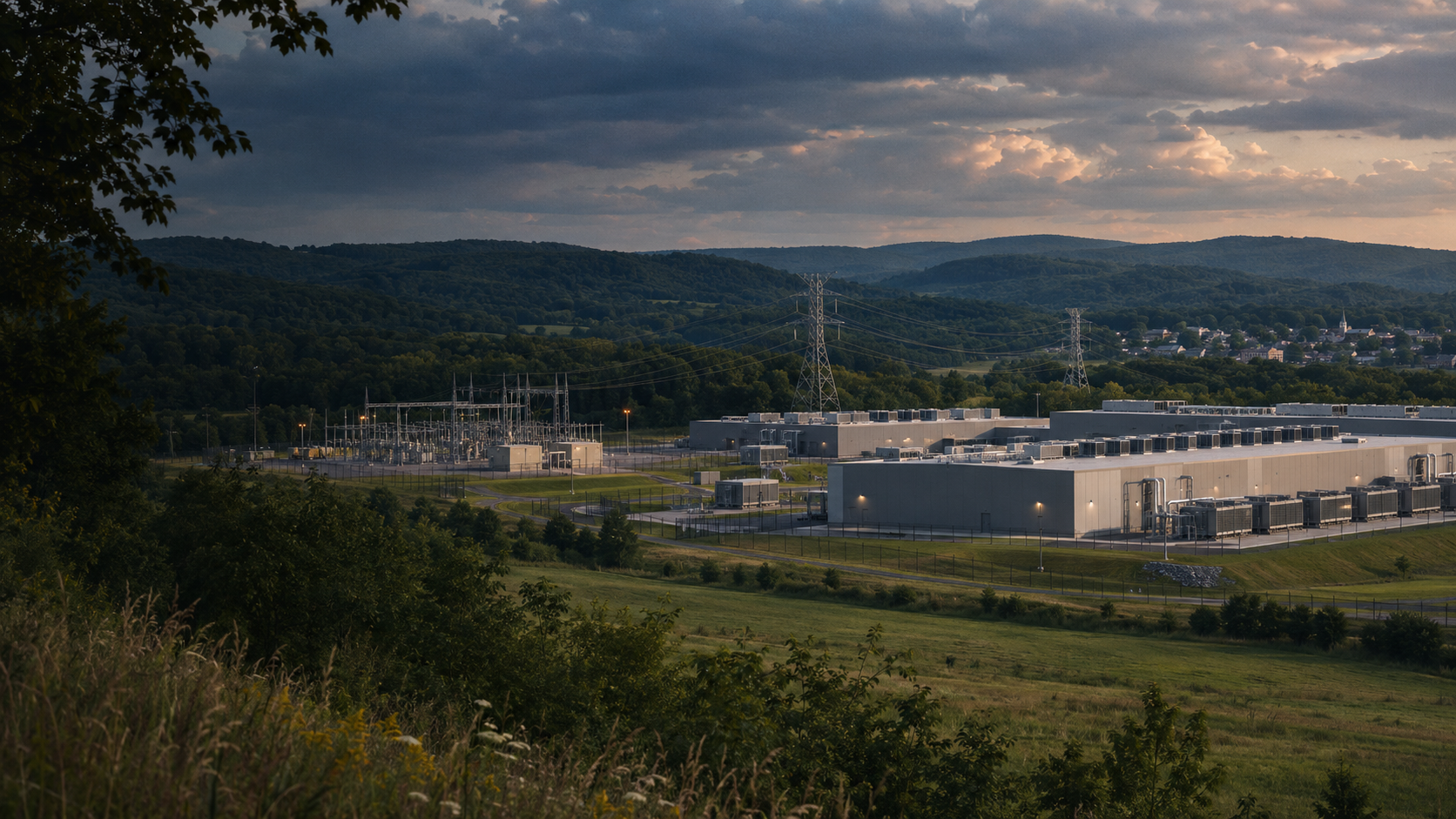
AI-generated concept image of a data center campus and electrical substation in a wooded valley

A public guide to AI infrastructure

National facts · Local consequences

Know what’s
behind the AI boom.

Explore data centers by state, see what evidence says about their benefits and environmental impacts, and understand the AI systems driving demand.

Browse by state
AI-generated concept image · no specific facility depicted All 50 states   /   Local detail
Our standard

Claims get sources. Unknowns stay visible. Evidence gets the final word.

How we check

The public guide

Find the facts
that matter.

Use The Watt Line as a reference: find facilities, understand what they change locally, and separate what’s established from what’s still uncertain.

National view · Local evidence

AI, in plain language

What AI is.
What “open”
really means.

AI is a broad category of computer systems. The label alone does not tell you how a system works, how accurate it is, or what it costs to run.

NIST’s AI definition
01

AI systems

NIST describes AI as machine-based systems that can make predictions, recommendations, or decisions toward human-defined objectives. Generative AI models can create text, images, audio, video, and other content from patterns in data.

NIST’s generative AI definition ↗
02

Open-source AI

Under the Open Source Initiative’s 1.0 definition, people must be able to use, study, modify, and share an AI system. The definition also calls for access to training-data information, source code, and model parameters. Downloadable weights alone do not establish that all those parts are open.

Read the Open Source AI Definition ↗
03

Benefits and risks

Open licensing can enable inspection, adaptation, and sharing. It does not guarantee accuracy or safety. NIST documents risks for generative AI including false but confident outputs, privacy concerns, harmful content, and cybersecurity threats; how these apply depends on the model and use.

NIST’s generative AI risk profile ↗

Data-center evidence

Benefits and costs,
tested against records.

Effects differ by facility, community, power supply, cooling system, and local agreement. We assess each claim with the evidence that can confirm it.

No blanket score for every facility

Benefits to verify

What can a project deliver?

  • Jobs: separate temporary construction work from permanent operations roles.
  • Public revenue: compare taxes paid with abatements, grants, and service costs.
  • Investment and computing: document what is built, who uses it, and what local commitments are made.

Evidence: payroll and job reports, tax agreements, budgets, permits, and verified project disclosures.

Environmental & community effects

What does a site use or change?

  • Electricity: facility demand, power source, and grid impacts.
  • Water: withdrawal and consumption, cooling method, and local water context.
  • Land and pollution: site footprint, backup generation, emissions, noise, and traffic.

Measured values, projections, company claims, and unknowns will be labeled separately.

National context · DOE / Lawrence Berkeley National Laboratory

The 2025 U.S. report estimates data centers used 192 TWh of electricity in 2024, about 4.7% of U.S. electricity use. That national estimate does not describe any one facility.

Read the report

National facility directory

Every state.
Every source.

Choose a state to explore publicly documented data centers, their named operators, and the environmental and community information available in public records.

This is a curated starting directory, not a complete census. The seed dataset names operators but does not separately identify site owners; missing environmental data remains unknown.

Browse all 50 statesLoading directory…

A method you can follow

One standard
for every claim.

We use the same source rules for benefits, costs, and claims about AI. We label estimates, company statements, measured outcomes, and gaps.

Read our principles
01

Define the claim

What exactly is being said, and what would count as evidence?

02

Find the record

Start with original documents, public data, and peer-reviewed work.

03

Test what challenges it

Include relevant counter-evidence and disclose where sources disagree.

04

Show what remains

Separate established facts from estimates, gaps, and unanswered questions.

No verdict without a visible trail back to the sources.

Built from the record

Every source
has a label.

Readers should know where information came from, who produced it, and what it can—and cannot—establish.

APublic recordsFilings, permits, hearings, utility documents
BIndependent researchPeer-reviewed studies and public datasets
CCompany disclosuresUseful evidence, clearly identified
DCommunity testimonyLocal experience, in its own context

The Watt Line

The systems behind AI can be hard to see.
The evidence shouldn't be.

A public resource for understanding data centers, their local effects, and the AI systems they power—built from evidence readers can check.

Back to the beginning